
When a beloved pet dies, many people in today’s world suddenly find themselves facing thoughts and emotions they had not anticipated. Grief over the loss of a pet can be as emotionally – and even spiritually – challenging as it is over losing a human friend or relative. For more guidance and support, readers may find Grieving the Loss of a Pet helpful. In fact, it can even be more challenging given the fact that there is a bit of an unfortunate social stigma associated with mourning a pet. Animals are often expected – unjustly, of course, we are very careful to note – to simple “get over” the death of their faithful friend. Many well-meaning friends and family are quick to offer solutions to their ill feelings that are not,in fact , extremely healthy. Quickly finding a new “replacement” pet is not often a good idea, nor is simply pretending that the forthcoming emotions of grief are not troublesome. Yet, those are the things that many pet owners find themselves, subtlety encouraged to do.
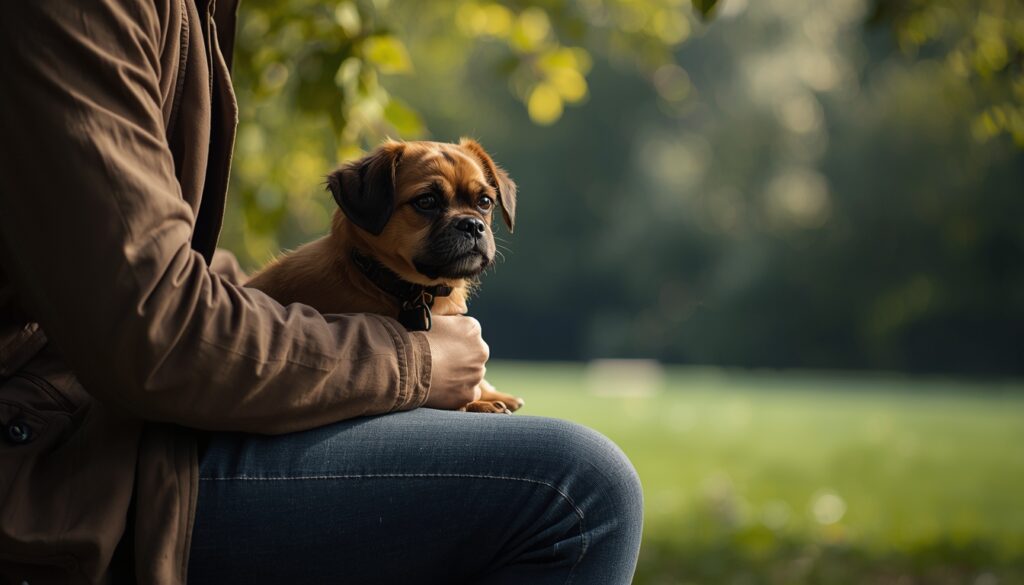
It is largely for this reason that scattering pet ashes has become an increasingly popular tradition in recent among pet owners who have lost their beloved companions. When a person scatters the cremated remains of his or her pet, others in the pet owner’s life do not necessarily have to know about the grief that led to the act. The stigma of that grief becomes diminished because there is no pet cremation urn or pet burial site that a person’s friends or family can comment upon. The ashes are simply scattered, and the memory of the pet remains forever – if privately – associated in the ower’s life with the special place upon which the remains were scattered. For many people, this is the perfect arrangement for memorializing a special pet.
Because the thought of scattering a pet’s ashes may seem strange to people who do not necessarily spend a great deal of time thinking of the death of their cat, dog, bird, hamster, guinea pig or other faithful friend, we have compiled the following list of tips and other tidbits about this tradition that many have found to be such an unexpected blessing in their time of emotional need.
Who Can Scatter Pet Ashes
It may be surprising for many pet owners to learn that there are no restrictions on who can scatter a pet’s cremation ashes. No special licenses are required, nor are there any legal regulations that one must adhere to in terms of training or certification. All that’s required for a person who wishes to scatter the ashes of a beloved pet is a strong desire and a love for the deceased pet whose memory is to be so honored. It may be true that a strong emotional attachment to a pet may make scattering ashes difficult for some pet owners, and in those cases, the person might be well suited to ask a trusted friend or family member to do the job to his or her order. And, in some cases, the thought of scattering the remains of a pet is a bit morbid. But, other than those matters of taste, there should be no limitations on scattering ashes, a tradition that is truly for everyone.
A counter consideration to this is that, while many people might assume they can hire a professional service to scatter the ashes of a beloved pet, the truth is there are few (if any) companies that would be available for that sort of job. The fact is, when it comes to scattering a pet’s ashes, a person is, basically, on his or her own to simply open a cremation urn that has been returned from a veterinarian’s office (or some other facility that conducts or arranges pet cremations) and toss the remains over some special place. The emotions involved may make this job a little trickier than others, but, in general, it is a very simple procedure that anyone can complete – provided the right mindset is in place.
Where to Scatter Ashes
Where to scatter ashes is another matter entirely. This is not always quite as simple as the act of spreading the ashes themselves. But, to be sure, it is not a complicated matter either. The main rule of thumb to keep in mind when scattering a pet’s ashes is to be sure to have permission from the land owner if you intend to install some sort of permanent memorial sign over the place where the ashes will be scattered. Other than that, there is usually no problem (from a legal perspective) with scattering the ashes wherever you may desire. Cremation ashes for pets are generally not easily distinguishable from traditional turf, and, once they are scattered, the land will show little or no sign of their presence. Given this, people who live on property they do not own – if they are renting a home or apartment, for example – will have little to worry about from a legal perspective if they do indeed scatter ashes on the property where they live. In the case of human ashes that are scattered, many experts recommend securing written permission from the land owner before performing the scattering, but, while that is probably a necessity from a legal perspective in regard to scattering pet remains, experts tend to uniformly dismiss the idea that it is an important consideration. This unique aspect of scattering pet ashes plays right back into the overall benefit that scattering ashes provides for a person who has lost a loved one: it is possible to carry out this tradition, often so important for the mental health of the grieving pet owner, without anyone noticing. This can be of great emotional value to someone who might want to deal with his or her difficult feelings of loss in a very private and secure manner.
Another helpful aspect to consider regarding where to scatter ashes is this: most cell phones in today’s modern world are equipped with software and global positioning technology that will allow the phone to give a user a brief signal whenever he or she comes near a specific spot. (This technology is often used by busy people to remind themselves to stop in at a particular location to check on a, say, a regular client when they are in the neighborhood.) This setting can help the pet owner in an invaluable way by sending the grieving soul a quick reminder of his or her pet each time he or she passes by the place where the pet’s ashes were scattered. This is one reason why many people have chosen (quietly, mind you) to scatter ashes at a favorite park or some other well-visited public place. If a beloved cat’s remains are scattered quickly, say, in downtown Houston, Texas in a famous park known as “Discovery Green,” the owner, if he or she works in one of the nearby offices, could simply set a cell phone to send a quick message every time the phone passes by the special spot in the park. And that perpetual, daily reminder of the beloved animal friend would become a grand blessing indeed – one that the pet owner need not necessarily tell anyone else about but, rather, simply just experience the private blessing each day on the way to and from the workplace.
How to Scatter Ashes
Scattering ashes is a relatively simple matter, more simple than one might thing in fact. As we mention above in the section regarding who may scatter ashes, there is no special training or skills required to scatter the ashes of a beloved, faithful pet. All that’s necessary is the desire.
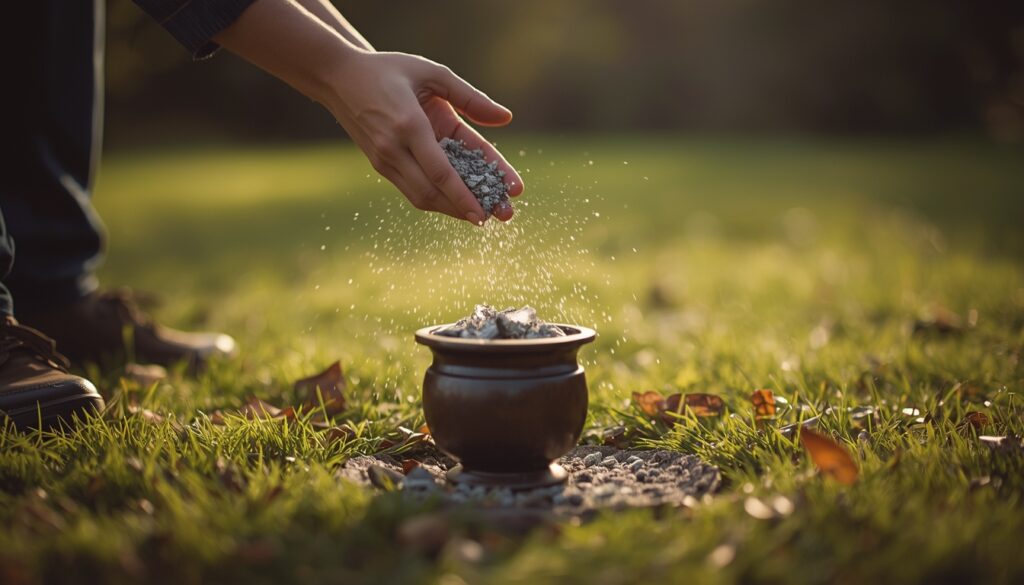
Once the decision has been made to scatter the ashes, a person simply must take the cremation urn (or, often, box) provided by the veterinarian’s office or other cremation facility to the scattering location. Then all that’s required is to open the urn or box and distribute the ashes over the land.
There is no right or wrong way to scatter the pet ashes. Some people choose to use a small spoon or other similar device to scoop the remains out of the container a little at a time, while others simply pour the entire contents over the special place. The only important consideration in doing the latter is the weather. This, of course, is not a good idea for a windy day. We hope that observation is an obvious one. (Though it should be noted that there is nothing intrinsically wrong in getting some of the ashes on you as you scatter them. Animal cremation remains are certainly not toxic in any way. But the thought of being covered in cremation remains during a scattering of the ashes does, indeed, sound somewhat grotesque, even if it has been portrayed comically in more than one television show or movie.)
Alternatives to Scattering Ashes
For those who are not convinced that scattering of a pets ashes is the choice they would like to make for their beloved pet, there are plenty of other memorial options available. These include traditional burial of a pet and, in a growing number of cases, pet owners are finding that their pet’s ashes make for intriguing, touching heirlooms that can be displayed in their homes. Many pet owners, in fact, collect the cremation remains of their pets for their entire lives and request in their last wills and testaments that the remains be buried in their urns with their own bodies. For more ideas on honoring a beloved companion, see Memorializing a Pet with a Cremation Urn. This practice may strike some people as a little bizarre, but, nevertheless, it seems to be a growing trend and is proving to be a great emotional comfort to many pet owners.