
It is widely acknowledge that, when a person dies, there are two main ways to dispose of his or her body: cremation and burial. Since even before the age of written history, choosing between these two methods has involved a clash of ideals making this, perhaps, the most controversial question of mankind’s history. Below is a look at the history of cremation followed by a short discussion of where it is today and where it appears to be headed.
Societies that have promoted cremation
Cremation, since its first rise to popularity in about the 9th century B.C. (the age of Socrates and other intellectuals of Greece), has been mostly a result of two concerns: sanitation and expediency. The practice has come about, historically, when, say, military leaders have needed a means for quick disposal of those killed in battle. Or when, civic leaders have been faced with plagues that have killed large portions of a community. Cremation has always been seen as a means for quick disposal of a body so that the the life of the living can quickly resume.
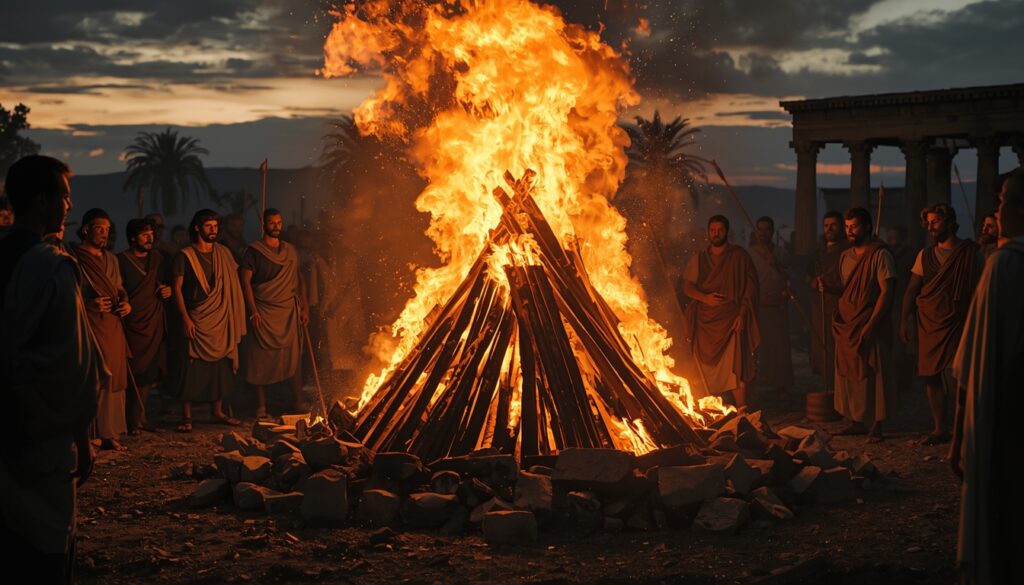
Even in cultures in which cremation is a part of elaborate funeral traditions – such as the faith of Hinduism – the overriding idea is that burning a body quickly releases its spirit to the eternal forces that rule the Universe. This allows the spirit to do its eternal work as expediently as possible.
This view does, of course, have its critiques and has been even been lampooned in great fictional works that are critical of disposal-oriented societies. Of particular note is Aldus Huxley’s classic novel Brave New World in which the imaginary society of tomorrow flippant disposes of its deceased through cremation and never gives the ashes which pour out day and night through factory smokestacks a second thought.
Also, it is not lost on critiques of cremation that the vast majority of the millions killed during the German Holocaust were horrifically cremated – often tossed into ovens while still alive – without a second thought from their tormentors. This has been cited as the main reason why leaders of the Jewish faith prohibit cremation today.
Societies that have discouraged cremation
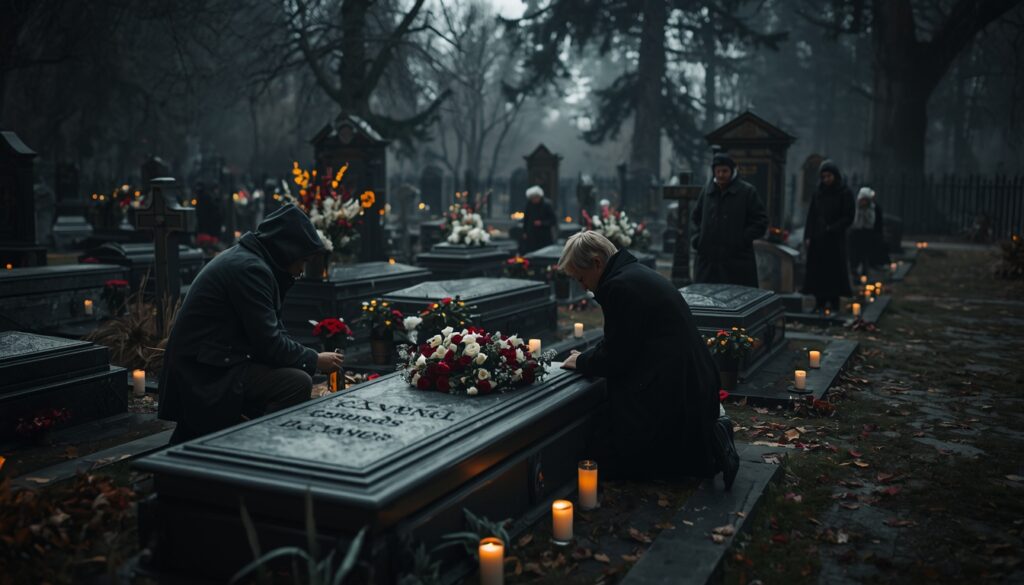
Objections to cremation have been as common as the practice itself, since man kinds earliest days. Largely the complaints against cremation have centered around the long-term concern for spiritual health – both of a culture and of the deceased and his or her survivors. Mourning is seen as a lengthy process to which fast-moving cremation is contradictory. Many a modern-day expert has noted that burial is an important cultural ritual because it gives family members a specific place by which to remember a deceased in the years after a death. This is certainly why cremation urns have been a part of cremation since its earliest days – urns are often stored in special places that can be visited regularly by loved ones. But, even with urns as an important memorial tool, leaders of many societies and cultures across the globe – as well as the oceans of time – have discouraged cremation as a general rule.
The general mindset of societies that have discouraged cremation is that effects of a death upon the living should not be dismissed or minimized. Mourners should not be encouraged to simply “move on” after the death of someone they loved but, rather, to absorb the death into their own psyche, carrying the deceased’s spirit with them on through the ages, celebrating the blessed life, carefully, for the rest of their days.
It is true that the modern invention of cremation jewelery and keepsake cremation urns help with this goal even in cases of cremation, and that may account for the current state in cremation history in which cremations are expected soon to overtake burials as the most popular death disposal method in most of the world.
Current state of cremation
While accurate statistics have been kept only since about the middle of the 20th century, it is widely accepted that cremation is now more popular than ever, and it’s popularity is only growing. Several groups representing crematory operators say more than 150,000 cremations are conducted each year in the United States alone, and the per-capita rate of cremations in Europe is even higher. For families considering their options, see Direct Cremation: Costs, Process, and More or Cremation vs Burial: A Comparison of Each Memorial Service for a detailed overview.For families considering their options, see Cremation vs Burial: A Comparison of Each Memorial Service for a detailed overview.

The only areas in which cremation is not growing quickly in popularity is in the under-developed countries of the world. But that is largely thought to be a function of technology. As soon as today’s high-capacity cremation ovens are installed across the impoverished regions of South America, Asia and Africa, cremation will likely be on its way to accounting for 90 percent of deaths (or more).
Critics will point out that today’s climate for cremation seems frighteningly similar to that of Huxley’s fictional world, especially in light of evidence that cremation is no longer motivated by any realistic concerns for sanitation (medical experts across the world have long since debunked the notion that one can aquire communicable diseases from the deceased who are buried in a traditional graveyard). The motivation for cremation seems, therefore, almost exclusively to expidite, and simplify, the process of disposing of a body. While this may seem sacrilegious to some, others take solemn note that today’s memorial industry offers a great number of products by which a deceased person may be properly mourned and honored for decades – or even centures – following his life. It matters little whether or not he or she has been cremated.
Future of cremation
As we say above, cremation seems poised to eventually become the world-wide number one choice for disposal of a body. While this may be disconcerting to some, it is worth noting that burial is, as of this writing in 2014, still the overall number one choice across the world, and cremation’s popularity has ebbed and flowed over the course of mankind’s time on earth. So it is not entirely clear that the predictions of cremation’s eventual overwhelming dominance will ever come to fruition. <!– @page { margin: 0.79in } P { margin-bottom: 0.08in } A:link { so-language: zxx } –>