
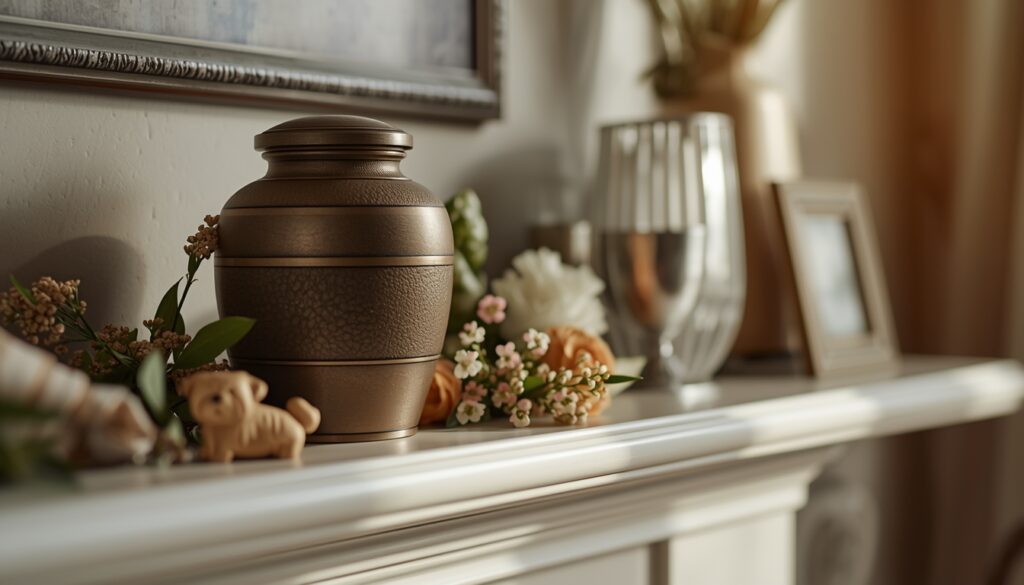
In this day in which environmental laws and property value concerns make burying a pet often impractical (except, perhaps, in expensive pet cemeteries or very remote private property), pet cremation is the method of choice when a family has lost a beloved pet. For many people, choosing a pet cremation company is simple: they just go with the company recommended by their veterinarian, and nearly every vet in practice in the United States has a working relationship with at least one crematory. In most cases, standard cremation services don’t cost more than $100, and the service is fast and seamless: in less than a week after your beloved pet has died, you can typically expect to have the remains returned to you in a stylish, sturdy cremation urn that you can display discretely (or more outlandishly if that’s your style) in your home.
What to Expect in a Pet Cremation
As we say, typically, a pet cremation is a seamless procedure. Nothing will usually be required of a pet owner except a request for the service, perhaps a signature of authorization, an affordable payment and a trip to an office to pick up the remains. (In some cases, crematories will even arrange for delivery of the remains – often for no additional charges.)
Most pet owners, it seems, are not enthusiastically interested to know more about what happens behind the scenes in a pet crematory, and that may be understandable. But it may be helpful, perhaps even comforting to have a good idea anyway.
In general, a pet crematory is a fairly sterile, factory-like place filled with equipment operated by train personnel who follow strict safety guidelines and a company policy intended to make sure customers get the remains they have ordered. While state and local laws rarely directly regulate the specific inner-workings of a pet crematory, industrial safety rules and agencies do tend to oversee the operation of the crematory ovens. Most crematories will have a set list of procedures they follow to ensure that customers get the exact service they have paid for from the company, but customers should know these procedures are largely self-enforced. Customers should not depend upon government inspectors to make sure the company follows its own rules but, rather, they should ask for reports from the crematory itself or, perhaps, from previous customers. As is the trend in many industries these days, it may always be a good idea to type the crematory’s name into a search engine before deciding to do business with the outfit. If many other customers have had problems with the crematory in the past, it is a good bet many of their complaints will find their way onto the Internet’s ever-growing number of consumer review websites where customers can do what they can to hold company’s accountable to doing good business.
In general, customers can expect a crematory staff to pick up an animal’s remains from whatever location the family requires (and this service is typically available 24 hours a day seven days a week), and transport the body to its facility. Once there, the animal’s body will be given an identification tag, and the company will begin to process the cremation as ordered.

Unlike crematories for human bodies, pet crematories are allowed to – and often do –cremate animals “in community” as opposed to individually. Typically, these mass cremations of several animals will be done only with the consent of the family, and almost all crematories will provide individual cremations if that’s what the family desires. Customers should know that mass cremations are often far less expensive than community cremations, and, for that reason, they are a popular choice. Nevertheless, it is highly unethical and potentially illegal for crematories to cremate animals in mass after their families have ordered an individual cremation. It is for this reason that most reputable pet crematories are very careful with their identification procedures. Their goal is always 100 percent perfection at being able to identify an individual pet’s remains at every stage in the cremation process – from arrival at the facility to the capturing of the ashes in a cremation urn to the delivery of the ashes to the family.
How to Choose a Pet Crematory
We have already offered one idea that comes naturally to most internet users in today’s world: check online reviews for any pet crematory you are considering hiring for your pet’s cremation. Unfortunately, in this time when government agencies do not closely monitor the business practices of a pet crematory, independent reviews from previous customers may be your most solid method for evaluating a potential crematory.
We also offer advertising as a means by which to decide on the best crematory for your needs, but it is important to remember that most crematories get most of their business by working directly with veterinarians, so all advertising they do will, typically, be in veterinary trade magazines and websites that devote themselves to animal medicine. The average reader, therefore, will likely not know about even the largest pet crematories in his area, therefore – unless he consults a veterinarian.
So that brings us to the most effective, and perhaps safest, means by which to choose a pet crematory: simply consult a veterinarian you trust. Because most pet deaths in today’s world happen via euthanasia in a veterinarian’s office, veterinarians today are typically well acquainted with pet crematories who serve their local area. Many (if not most) veterinarians have a working relationship with pet crematories they trust, so going with whoever your veterinarian recommends is almost always a good choice. It should be noted that it’s always a good idea to be on the lookout for signs that an under qualified pet crematory may be simply passing kick-back payments on to veterinarians in exchange for their recommendations all while providing shoddy – even unethical service – to their customers. This is one great reason why customers should always do an investigation of the pet crematory even before they formally accept their doctor’s suggestion. The best way to analyze and investigate a pet crematory is to simply stop by the facility during business hours and ask to take a quick tour. No reputable company should refuse such a request.
What to Do With The Ashes
Pet crematories will almost always have a good supply of generic-but-stylish pet cremation urns in which they return a pet’s remains to the family. These urns are usually included with the cost of the cremation, and many customers find that they work quite well for their purposes of memorializing their pet. For more ways to honor your companion, see Pet Cremation: An Ultimate Guide to Remembering a Beloved Pet.

Nevertheless, many customers also desire more choices in their cremation urn. Fortunately, the online world is overflowing with websites that offer pet cremation urns of all shapes, sizes and materials for reasonable prices. Before deciding to accept the crematory’s offer of its generic urn, customers would dwell to explore these many sites and order the exact urn that will suit their memorial needs for their faithful pet. For detailed guidance, see Guidance for anyone looking for a Funeral Cremation Urn. It is worth noting that a crematory will certainly put the pets remains in any cremation urn you may provide for them, regardless of whether your family has purchased it from them or not. Likewise, the staff at many crematories are also happy to transfer a pet’s remains from the generic urn to a more personalized on purchased even months or years after the cremation.