
No one keeps official statistics on this matter, but it is apparent that a huge majority of pet deaths in today’s world result in cremation as opposed to a wide variety of other options that are available and were once perhaps the most common methods of disposal of a beloved pet’s remains. The fact is, in today’s pet care environment, very few well-cared for pets die in the very homes in which they spent their lives with their families. Rather, in most cases, pets who live safe lives in the comfort and protection of their owners will avoid deaths at the hands of accidents and predators and will end their lives with a disease that simply cannot be treated in a dignified, comfortable (or economical) way. Euthanasia is almost always the option recommended by veterinarians and accepted by pet owners in these cases which, as we say, account for an increasing percentage of pet deaths each year. (One very unofficial estimate by an industry expert in a blog piece is that about 75 percent of all pet deaths in the United States today occur by euthanasia in a veterinarian’s office.) After a euthanasia procedure, veterinarians almost always recommend the families choose cremation over other possible alternatives. The choice is so common these days, in fact, that some veterinarians have reported on blogs that many of their clients assume cremation is the only legal choice, that, in fact, there are no other good alternatives.

Why Veterinarians Recommend Pet Cremation
The cynics view of why veterinarians typically recommend pet cremation for their clients whose pets have been euthanized is simply money. The assertion will often be that veterinarians are treated to financial incentives from pet crematories in exchange for their recommendations of clients. While it is true that most pet crematories operating in the United States typically run marketing campaigns aimed at convincing veterinarians to send their clients to their facilities for cremation, there are no reliable reports that pet crematories and veterinarians are run amuck with illicit, unethical deals by which veterinarians end up, more or less, on a crematory’s payroll.
Rather, the more likely scenario is that veterinarians recommend pet cremation to their clients because it is a comforting, popular, and economical choice – much more appealing that some of the alternatives that we will discuss at the end of this article.
Pet cremation allows families to dispose of the beloved pets remains on their own terms that will be most helpful for their state of grief than some of the alternatives that can seem sudden, dramatic, or even heartless. It may be ironic to think of cremation as not being a “sudden” form of disposal of a pet’s body, but nevertheless, it is not. Cremation does transform the pet’s physical body into an entirely other form relatively quickly, but, having the remains returned to the family in a stylish cremation urn allows a family to celebrate the pet’s life in the presence of the vary remains for an indefinite amount of time before finally deciding upon a final disposition. Many families may choose to scatter the cremation ashes over some special place or perhaps to simply bury the remains or maybe even toss them in with their household waste. Any of these options can be quite comforting and helpful for a family when done many months, or years, after a pet has died, and some may also explore Ideas For Outdoor Pet Memorials to create a lasting tribute in a meaningful outdoor space. Done right away – within a few days of the pet’s death, they can end up being emotionally traumatic, however. Cremation gives pet owners an opportunity to cope with their grief over the loss of their beloved pet on their own time. It is even often the case that families never dispose of the ashes that the remains stay on permanent display in a fitting cremation urn for many decades after a pet’s death. While this does not have to be the manner in which a family memorializes its beloved pet friend, it can be an extraordinarily comforting and healthy thing to do.
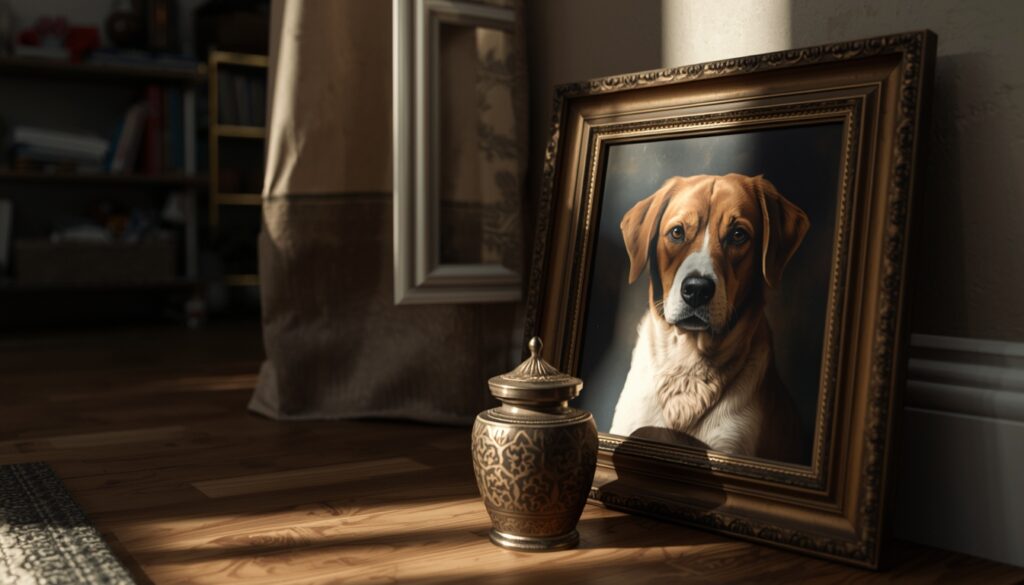
Likewise many veterinarians recommend cremation simply because it offers many personalization features that help families to cope with their grief over their loss. Cremation urns today can be customized in many ways, for a wide variety of prices. Just as in the case for cremation urns intended for humans, a huge selection of pet cremation urns are available on the internet for surprisingly affordable prices (often of less than $100). Many pet cremation urns can be outfitted with plaques or even medallions that feature the animal’s name, dates of birth and death and even a fitting epitaph. Sometimes families will find a way to include a photograph of the pet on a cremation urn. In other cases, pet cremations can be found (or custom made) to bare a significant resemblance to the pet itself. These sorts of features make the pet cremation urn trade uniquely suited to help grieving pet owners memorialize their beloved friends in a healthy and uplifting matter. While it is true that these same sort of customized memorials can be accomplished even without a pet’s cremation ashes in hand – say, as in a solid bronze sculpture or some other work of art that may not be able to double as a pet cremation urn. But the addition of the ashes – even if they are not visible to a person who would view them in a family home – makes for a comforting touch that inspires many veterinarian to feel most comfortable recommending pet cremation.
How Veterinarians Handle Pet Cremation
Pet cremation is, typically speaking, not something that veterinarians mention to their clients except upon request.Professional ethics and courtesy usually dictate that a doctor wait until asked for a recommendation about what to do with a deceased pet’s body before venturing any advice. But, once approached with the question, many veterinarians will not hesitate to recommend that a client do business with one of the pet crematories that routinely serve his or her office.
In many cases, veterinarian offices have set up convenient procedures by which a client who has just lost a pet – whether via euthanasia or some other cause – does not have to make any call or fuss over delivery of the pet’s remains to a pet crematory. Rather, the veterinarian’s office staff will simply call the pet crematory with which it has a good relationship and request that a staff member come for a pick-up and begin cremation proceedings. In such cases, the pet crematory will typically leave a bill with the veterinarian for its services, and the customer will be asked to pay the full amount (without the doctor adding any extra for his time and office space). The details of the transaction are then established between the veterinarian and the pet crematory itself, with the grieving client left only to simply work through his or her own grief in his own schedule. There is no need for the client to fuss over planning a quick memorial service, for example. In fact, many veterinarians report that clients who have paid for the cremation service of their beloved pet will leave the cremation urn at the veterinarian office for months, sometimes for more than a year. Because pet cremation urns do not require any sort of specialize storage facility, this is typically no problem for most veterinarian offices and many clients feel most comfortable leaving the ashes in their doctor’s care until they are emotionally well suited to accept them and bring them into their home and, perhaps, even arrange a small memorial ceremony.
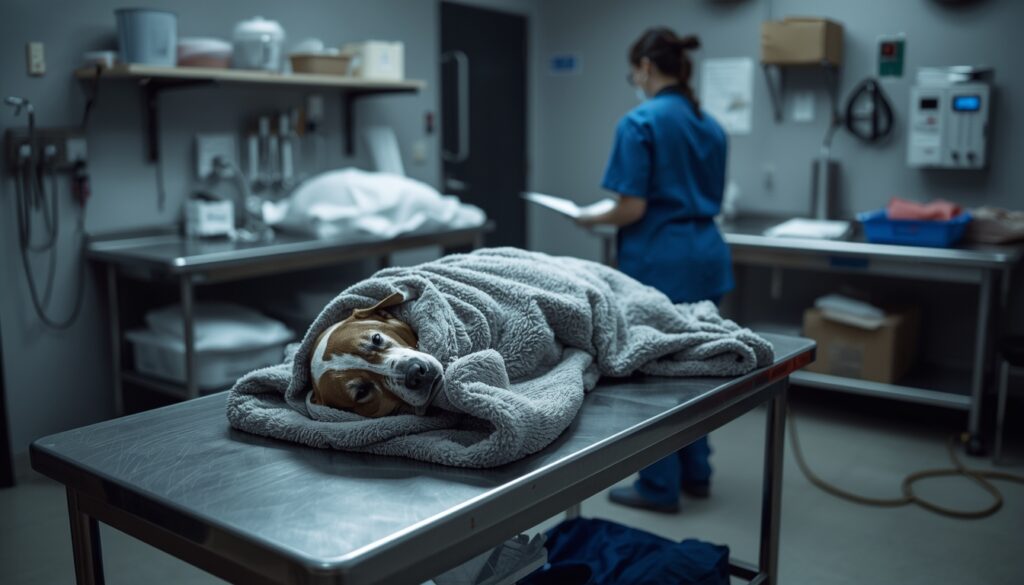
In short, a pet cremation service, ordered from a veterinarian, can be a seamless experience that is well worth the relatively small amount that most crematories charge for the peace of mind.
Alternatives to Pet Cremation
And many veterinarians as well as their grieving clients will testify that pet cremation can be far more valuable and comforting than the several popular alternatives that some pet owners choose.
The most alarming of these alternatives is to simply leave a pet’s body in a public place and wait for it to be picked up by a city crew. This practice is not nearly as common as it once was (thanks to the relative easy by which pet cremation is available in today’s world), but it still nevertheless used. Experts in health safety, veterinary science and even the emotional aspects of grieving will almost universally advise against this practice, though it does tend to be legal in many metropolitan areas (not always, however. Residents are strongly advised to check their local laws). The alternative to this practice is also still used somewhat frequently but, likewise, not recommended by experts: some pet owners simply drive their deceased animals to a remote location in a rural area and leave the bodies there to decompose naturally. While this option may be in keeping with nature’s way of disposing of a body, it can lead to many emotional problems – particularly for children – among the people who knew the pet well and thought of it as, more or less, a family member.
Still other options that some people use are, likewise, not recommended by experts. Many city public servants, when confronted with a call from a frantic pet owner about what to do with his or her deceased pet’s body will recommend simply double bagging the pet in a plastic wrap and tossing it in with other household waste. As you might expect, this method can lead to emotional trauma for those who were once attached to the pet and, in situations in which a pet has been euthanized, experts advise against it from a public health perspective. In general, the concern is that poisonous chemicals used in the euthanization procedure will be tossed into a public landfill with the pet’s body and find their way into the ecosystem in a variety of harmful ways – including by being consumed by other animals or slowly dripping into the public water supply beneath the soil in which they are buried.
The other alternative that is typically frowned upon by experts is backyard burial. To all of the health and safety experts who advise against the other practices mentioned, we also add financial and real estate experts on this one. Generally speaking, experts say that burying an animal on private property (even in cases in which it is legal – cases which are fewer and fewer in these days of strong municipal codes in most urban areas) is risky in terms of property values. Though a person selling a piece of real estate may be able to conceal the existence of a animal’s grave site from a perspective buyer, many real estate transaction forms ask a seller, very specifically, if a pet’s remains are buried on the property in question. Answering yes to that question can often lead to a diminished property value, and falsely answering no can often lead to legal action from the buy if he or she discovers an animal’s remains even years after a sale. This practice so common in the late 19th and early 20th centuries even in neighborhoods of large cities is increasingly becoming less and less common as the advent of affordable and convenient pet cremations makes burials an almost obsolete practice. The same concern for euthanasia chemicals that we mentioned above about sending a deceased pet directly to a landfill applies to burial in a home. In fact, the problems these chemicals can cause for a family are even more pronounced when it comes to home burial: a few pet owners have reported that other animals – including other pets – have ended up digging up the remains of an animal buried long ago. Upon feasting on the remains – or even as a result of exposing themselves to the soil surrounding the body – the new pet ended up getting sick as a result of the poisons still left over from the euthanasia. While this scenario is rare, it is, indeed, possible and yet another reason why experts routinely recommend cremation over burial – or any other method of disposal of a deceased pet’s body.